Claude MAX 20x ($200/Month): A 2-Month Real-World Review
Do You Know Claude?
It's the star that's been dominating not only the AI industry but also the stock market and political news in 2026. Especially recently, it's been noisy with various issues involving the U.S. Department of Defense and President Trump. Originally, it was drawing attention for its excellent performance, but the start of 2026 has truly seen Anthropic and Claude's name recognition skyrocket.
From Gemini to Claude
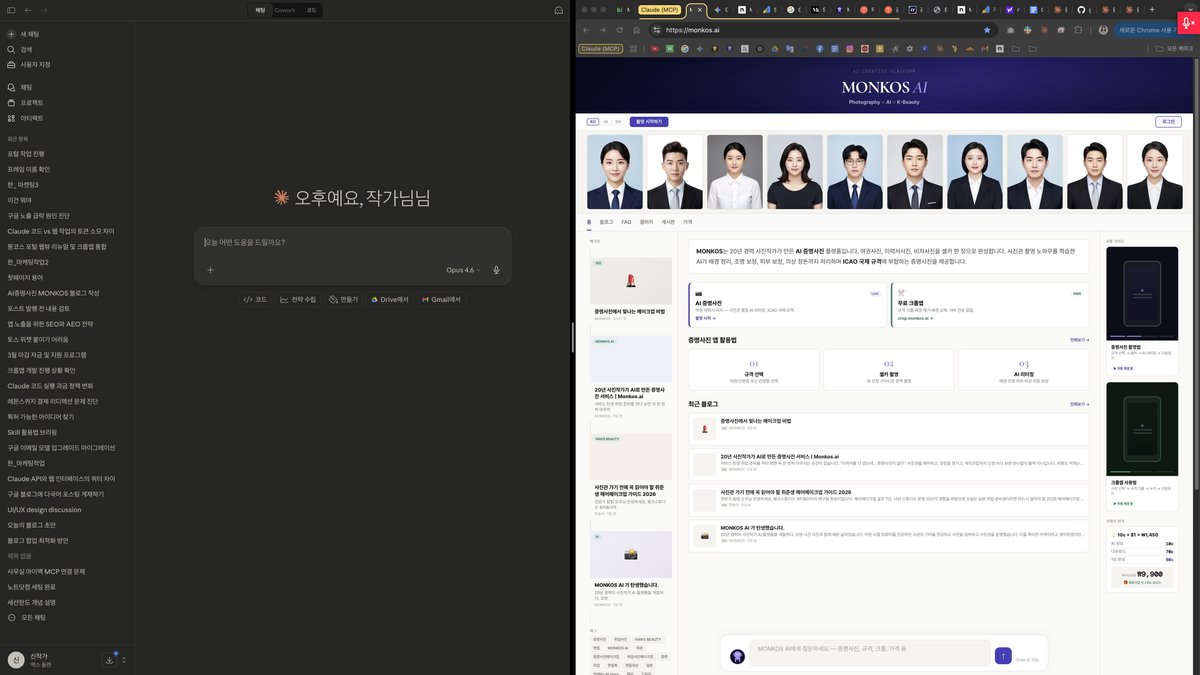
It's been about two months since I, a Gemini Ultra subscriber, built a workspace centered around Claude. My first impression was that its concise, to-the-point answers and focus on coding were "outstanding."
Initially, I encountered Sonnet through the well-known "Cursor" IDE. While Gemini Code Assist, Sonnet, and GPT-5 couldn't overcome the obstacles I faced during coding, I discovered that Opus solved the problem in one shot, and Opus became my main engine. To use Opus to my heart's content, I also subscribed to Cursor Ultra.
Transition to Claude MAX
However, the Opus usage quota of the Cursor Ultra subscription, priced at $200 per month, lasted less than 10 days with my workload, resulting in on-demand, i.e., additional API pay-as-you-go charges. After much deliberation, I switched to the Claude MAX 20x $200/mo plan.
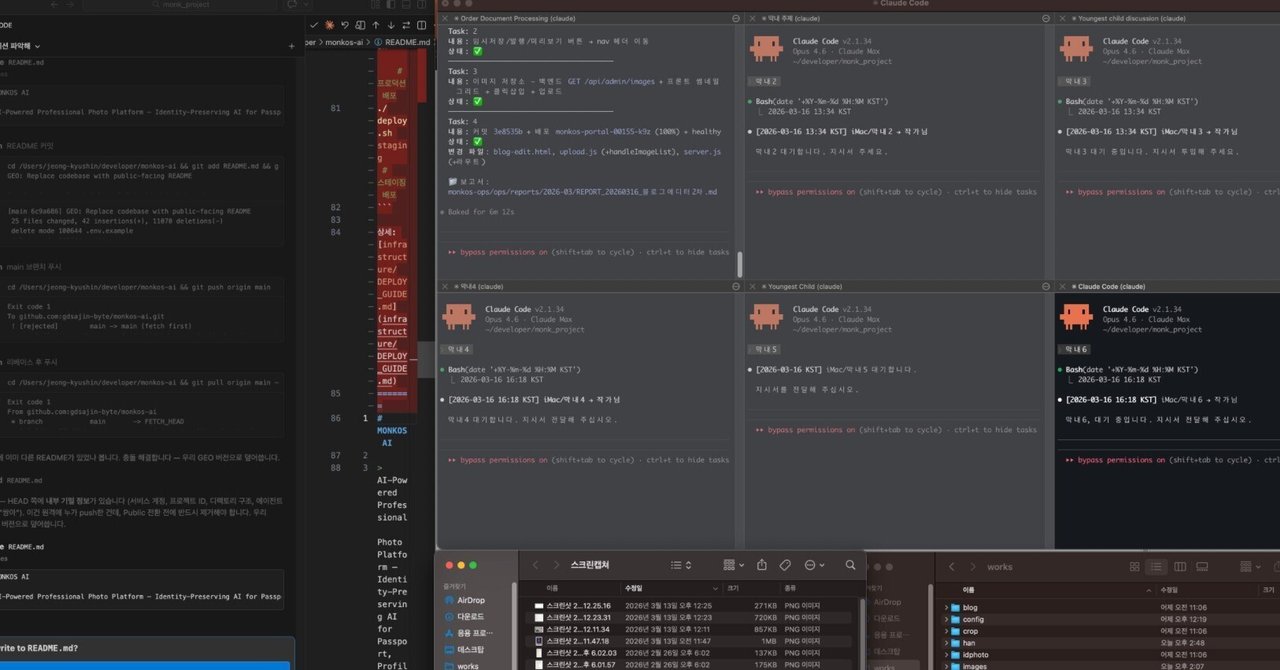
After that, my work efficiency skyrocketed. I started running the Web UI, Co-Work, the VSCode extension Claude Code, and even a multi-terminal CLI simultaneously.
Currently, I'm working while using up this Claude MAX x20 quota to its limit. If efficiency is good, I'll push even further. Do I really need to use it that much? Yes, more quota means more things I can do, and I can perform higher-quality reasoning and multi-agent tasks. For me, AI quota is always something I crave.
However, I'm not sure if general users focused on routine tasks need this much quota.
Multi-Agent Orchestration
With 6-7 or more Opus 4.6 terminal auto-modes running, an orchestrator to instruct and report on the system, Co-Work in Web MCP to assist with various tasks, and Web UI Claude to help with search and document work ── a system where usually 5 to 10 units communicate with each other and operate simultaneously is truly amazing and admirable.
Each Claude also runs multiple agents themselves. To efficiently respond to a single command, they deploy multiple agents to collect information and then report back. Recent news indicates that Grok released a version where four agents each take on different tasks, exchanging opinions and making decisions and executing tasks together. The technological direction of current AI agents seems to be set. Google is a step behind, but it seems to be rapidly shifting in the same direction.
Why Multi-Agent?
Is a multi-agent system really useful? You might think that since AI processes everything itself, dividing one engine into multiple ones won't produce different results.
What I've been researching and working on diligently since last year is precisely multi-persona → multi-agent. Through experiments where I defined four different personas in a single Gemini dialogue window and had them write a novel in a role-playing format, I confirmed that even with the same AI and the same engine, perspectives change, and different viewpoints emerge if given different roles.
This is a definite fact, but the problem is context continuity. The context resets when a session ends, consuming many tokens to restore the context again in each session. That's the core issue. How do you continue? How do you maintain consistent work?
I believe that the IDE that handled this problem best was Cursor. But I'm no longer a Cursor user. I built all the systems myself. The AI optimized for that very system is Anthropic's Claude, and that's why I plan to continue maintaining Claude MAX x20.